Protective Coatings & Blasting — Cake Commercial Services

Protective Coatings & Blasting

Protective coatings are the main defence against corrosion on steel and concrete assets. CAKE delivers surface preparation, abrasive blasting and protective coating application across industrial, commercial and infrastructure environments throughout New Zealand, along with the inspection and specification work that sits behind a coating decision.

Our Services

What we offer

01

Protective and anti-corrosion coating application to steel and concrete assets

02

Abrasive blasting and specialist surface preparation, including wet, dry, low dust and pencil blasting

03

High pressure water blasting and corrosion assessment and inspection

04

Corrosion mitigation strategies and coating specification design to meet a required service life

05

Containment systems for work in sensitive or occupied environments

Our coordinated service covers everything needed to get the work done on site, including access machinery, scaffolding, rope access, traffic management and confined space entry. We hold a full range of blasting and spray equipment, sized and selected for each project, and it travels nationwide in our own vehicles and trailers.

We work on a wide variety of structures and assets, from pipework and tanks through to steel bridges, lattice towers, industrial plant and high-rise buildings.

The fight against corrosion

The fight against corrosion

Corrosion is a slow, constant cost. Estimates put national spending on corrosion and its consequences at around three percent of GDP, and for asset owners it shows up as shortened asset life, unplanned outages and replacement costs that could have been deferred for years.

A protective coating system is what stands between a steel or concrete asset and that outcome. It only works if three things are right. The specification has to suit the service environment, the surface has to be properly prepared, and the coating has to be applied to the correct thickness and cured properly. Most coating failures trace back to one of those, and the most common cause is inadequate surface preparation.

That is why we treat blasting and surface preparation as part of the coating system rather than as site prep. It is also why we offer inspection and specification work as a service in its own right, so an asset owner can understand the condition of what they have and plan maintenance around it rather than reacting to a failure.

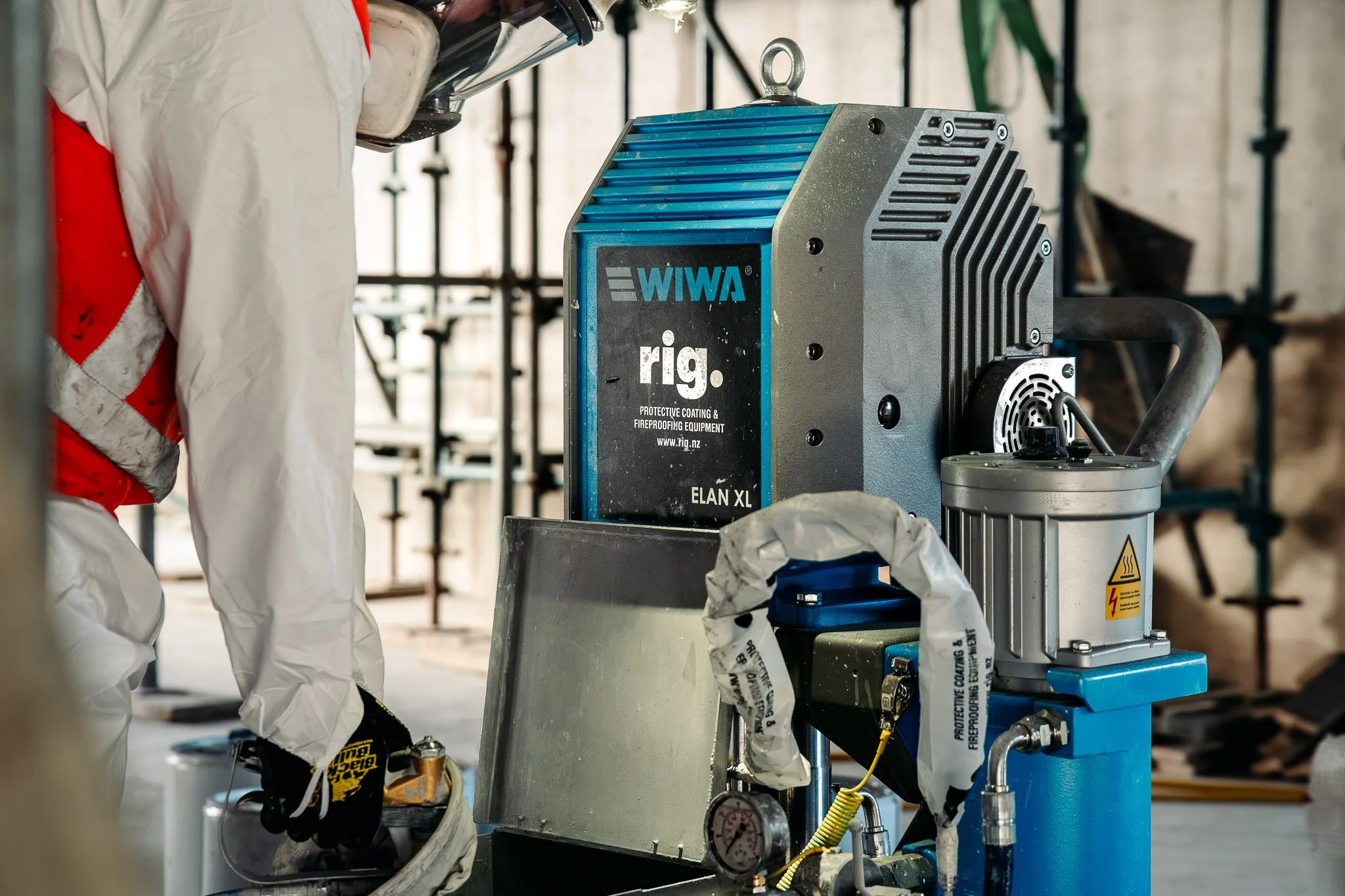
Cake team on site
How we work

How we work

We are on-site applicators, and much of our work happens in live environments where an asset cannot be taken out of service and the people around it cannot be disrupted. We have invested heavily in the systems that make that possible, including containment, dehumidification, fume extraction and VOC management, and we have solved problems on major sites where the alternative was a shutdown.

Everything we do is recorded. Our teams capture quality assurance data on site as the work progresses, so clients can see coating thickness records, surface preparation standards and photographic evidence at any point during a project rather than receiving a folder at the end. Our systems are ISO 9001, ISO 14001 and ISO 45001 certified. Our applicators are NACE qualified and Train the Painter accredited, supported by a full-time quality manager and a full-time training manager.

Where we work

We deliver protective coatings and blasting nationwide from bases in Auckland, Wellington and Christchurch. Our South Island team covers Christchurch and the wider region, including Queenstown, Wanaka, Central Otago and Southland.

We take on work at any scale. Large infrastructure and industrial contracts are a significant part of what we do, and so is a single tank, a car park deck or a rusted canopy — so it is worth asking.

Frequently asked questions

Service life depends on the coating system, the condition of the substrate, the quality of surface preparation and the environment the asset sits in. A well specified and correctly applied system in a moderate environment can last decades, while marine and chemical environments are far more aggressive. We can assess an asset and specify a system to meet a target service life.

Dry blasting uses abrasive alone and generally cuts faster. Wet abrasive blasting introduces water, which suppresses dust and is often required where the surrounding environment, the public or nearby operations cannot tolerate airborne particulate. The choice usually comes down to site constraints rather than the coating itself.

Often yes. We regularly work on operating sites and occupied buildings using containment, extraction and staged access so the asset keeps running. It needs planning, and we prefer to be involved early enough to work through it with the site team.

Both. We carry out corrosion assessments and condition inspections, and we design coating specifications and maintenance strategies. Some clients engage us for that work alone.

Talk to us about your asset

Tell us what you need protected and we will get you to the right team. We are happy to look at an asset and advise before anything is priced.